
Indian Handicrafts · Artisan Stories
The Hands Behind Indian Handicrafts: Why the World Should Know the Maker, Not Just the Product
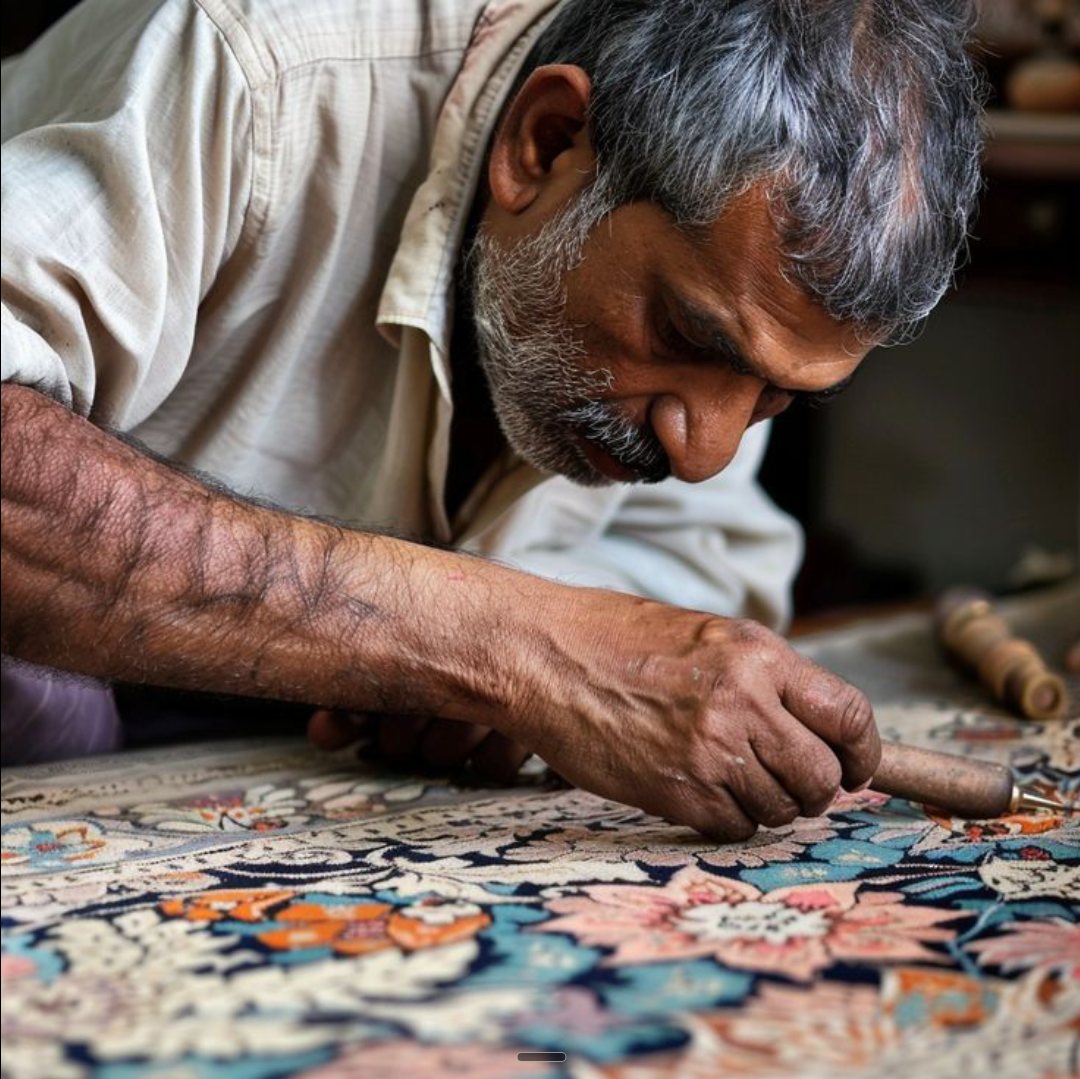
Walk into a beautifully designed home in New York, Dubai, London or Singapore, and something handmade will often catch your eye — a carved wooden table, a woven basket, an intricate piece of wall decor. You might admire the design. You might ask where it came from. But one question rarely gets asked: who made it?
Behind every authentic Indian handicraft is a person — someone who learned a skill passed down through generations, who reads the grain of wood, the tension of a loom, the patience a single carving demands. What looks like a product on a screen is really hours, days, sometimes weeks of human effort. Yet somewhere between the artisan's workshop and the final customer, that story tends to disappear. The product reaches the world. The maker often does not.
The world already wants Indian handicrafts
India holds an extraordinary range of traditional craftsmanship — wood carving, metalwork, textiles, pottery, baskets and furniture, plus countless regional and traditional Indian crafts that machines struggle to imitate. The small variations, the marks of the tools, the character of the raw material: to buyers around the world these aren't flaws, they're the reason handmade products from India feel different. The modern customer doesn't want another mass-produced object; they want something authentic, something with a soul. The problem is that the people who make these products are usually cut off from the people who want to buy them.
The long journey between two hands
Picture an artisan in a small workshop, shaping a piece from raw material. It's photographed, enters a supply chain, and passes through business after business — packaged, transported, marketed and finally sold thousands of kilometres away. By the time a customer sees it, the piece has taken on a new identity. They see a beautiful handmade product, but never the maker, never the weeks of work, never the story behind the design. That gap is exactly where the opportunity begins.
What if the artisan could reach the world?
What if a maker could photograph a product right from their workshop, describe it in a simple voice note, and let technology turn that into a professional listing — discoverable by international buyers, interior designers, hotels and online retailers? What if orders, inventory and payments all lived in one place? That is the idea behind CraftBridge. We start from one belief: Indian artisans shouldn't have to become technologists, exporters and marketers just to reach a global market. Technology should carry that weight for them.
Where AI meets Indian craftsmanship
AI is usually framed as automation and software. But it can also be a bridge between traditional craftsmanship and the modern marketplace. Through CraftBridge's AI tools, a product image can be enhanced, its background removed, rough notes turned into a polished description, keywords and pricing suggested, demand forecast, inventory tracked, buyer questions answered and languages translated. None of it replaces the artisan — it removes the barriers standing between the artisan and the customer. The craft stays human; the technology simply helps it travel.
From a small workshop to a global shelf
When the distance between maker and buyer shrinks, the workshop stops being the end of the journey and becomes the beginning. A handcrafted product is documented, priced and catalogued — and suddenly a US wholesaler can discover it, an interior designer can specify it for a project, a hotel can source it for a new property, and marketplaces can carry it to customers everywhere. Our planned buyer ecosystem spans US wholesalers, hotels, designers, furniture and home-decor brands, and marketplaces from Amazon to Wayfair to Etsy. You can meet some of the makers and browse the marketplace they supply.
Seeing more than the finished product
We also want people to see how the craft is made — the material being chosen, the first cut, the first layer of colour, the repeated movement of skilled hands, the final inspection. When customers understand the journey, they understand the value. That is the difference between owning an object and owning a story.
Fairer value begins with a better connection
This was never only about selling more. An artisan's work has value long before it reaches a showroom, and the person who created it deserves a real share of the value it generates. That takes better market access, better pricing, better procurement and logistics, better technology — and better storytelling. CraftBridge is built to bring those pieces together: not just another marketplace, but infrastructure around Indian craftsmanship, from procurement and quality control to warehousing, export documentation, GST, IEC and customs — the barriers that usually stop small makers from selling abroad.
The future should still have human hands
Technology is reshaping nearly every industry, but some things shouldn't be automated away — and the human touch in craftsmanship is one of them. A machine can copy a shape, an algorithm can suggest a price, software can predict demand. But the hand that makes the original still matters. The future of Indian handicrafts isn't a choice between tradition and technology; it's both, together — human hands create the craft, AI helps it travel further, and global buyers give it a larger stage, until the story finally reaches the person who values it most.
CraftBridge begins with one question: what happens when the world's demand for authentic Indian craftsmanship finally meets the people who create it? Our answer is a platform connecting Indian artisans with global buyers, with a mission to empower one million makers. But every mission starts with one product, one artisan, one story.
Build the bridge with us
Bring your craft to the world, or source authentic Indian handicrafts at scale.